
Skip to content
Website Design & Development

A useful website from the first visit onward.

Softglimmer designs and develops business websites for Madurai teams that need a clear public offer and a practical route to contact. The commission can include information planning, responsive layouts, development, CMS controls and release checks. We work remotely from Ranchi, using real content and representative visitor tasks to review the site. The handover also explains routine editing, account ownership and the support arrangement agreed for the build.

Explore the website scope
Content, interaction and ownership in one website brief.
  1. 01

    Understand the business

    Find clear service information and genuine context.

  2. 02

    Use the website

    Follow the important reading and contact journeys.

  3. 03

    Keep it useful

    Maintain approved content through an agreed routine.

An example journey, shaped around your requirements.

A complete website commission

Commission a developed website, with a reviewable visitor journey.

A public site needs to do more than look convincing in a presentation. It should explain the business, connect relevant information and let people take the next agreed action. We plan the page structure and visual direction together, then develop the selected templates and functions around the material your team can approve.

The scope may cover a first website, an improvement or a rebuild. Service and company pages, project evidence, media, editing controls and contact routes are considered as a connected experience. A redesign includes an inventory of useful content and destinations before changes are made.

Content, implementation and operating requirements should be explicit in the estimate. A private portal, store or custom application is additional work when it is needed. The optional first-interaction example below is one website acceptance task; it does not turn the whole commission into a performance or diagnostic service.
Choose the starting point

Choose a complete starting scope.

Begin with what should be different for visitors and editors.

01

Establish the first business site

Prepare a useful introduction, distinct service information, genuine evidence and a contact route. Agree the material needed for launch and the person who can approve each part.

02

Improve an existing journey

Review the actual reading, navigation, contact or editing difficulty before proposing a change. A focused improvement can preserve useful pages and working functions when a full replacement is unnecessary.

03

Redesign with continuity

Develop a new presentation alongside a plan for existing content, addresses, forms and connected accounts. Decide what stays or changes, then assess the implementation against that inventory.

What the proposal can include

Define the outputs behind the public website.

Your proposal names the included pages, controls, connections and launch checks.

01

Page and content plan

Identify the audiences, service explanations, company context and useful supporting material. Give each page a purpose, with a factual source and an owner for missing content.

02

Responsive visual system

Review type, navigation, image treatment, sections and actions using representative information. The design should accommodate ordinary longer headings and useful detail on phones as well as wider screens.

03

Developed templates and interactions

Implement the selected public page types and important controls. Agree normal and unsuccessful states so reading, navigation and contact form a usable journey rather than separate demonstrations.

04

CMS and media workflow

Choose the fields and section settings your editors need. Demonstrate a draft change, preview and the agreed publication route, while identifying technical settings that require a different owner.

05

Contact and enquiry paths

Define fields, receiving destinations and the meaning of the confirmation. Check correction, failure and accepted-request behaviour through the actual connections included in the implementation scope.

06

Search foundations and launch notes

Prepare the agreed metadata, canonical URLs, internal links and sitemap entries. Check important assets, retained destinations and visitor tasks before release, then document access and maintenance responsibilities.

An optional working example

A control looks available, but the first action is ignored.

Imagine a hypothetical business website opened by someone who has not visited before. An enquiry control is already visible, yet their first activation produces no clear result. Later, after a reviewer has waited and explored the page, the same control works. A warmed-up demonstration would miss that experience. This example is not a Madurai client incident or a claim about a particular technical cause.

Include the first ordinary visit

Open the reviewed page afresh and use the intended action without first navigating around it. Agree what feedback the visitor should receive and what happens if the action is not yet available. The person should not have to guess whether repeating it will help.

Follow the action beyond the button

Check that one intended action leads to the correct dialog or destination, with the relevant context and a usable close or return route. The implementation decision follows the observed issue; an attractive button or a later successful demonstration does not answer it.

Decisions to make together

Agree how the website will be reviewed in ordinary use.

Acceptance should cover the selected journeys and their important states.

01

Choose representative entry pages

Include the homepage and a useful inner page, with real content. A visitor arriving through a shared link still needs enough context to understand the business and reach an appropriate next step.

02

Review controls and feedback together

Inspect the relevant navigation, contact choices and form messages as a complete task. Note what the visitor sees after an action and how they recover or return, rather than checking only that a control exists.

03

Keep observations within their scope

Record the pages, devices and journeys actually reviewed. Resolve the agreed findings before release, without treating one demonstration as proof for every browser, connection or future content change.

Review the agreed website

Rehearse the visitor and editor tasks before launch.

Use approved content and suitable test material to inspect the first action, a complete enquiry and an ordinary return to reading. Include the selected phone and desktop layouts, meaningful errors and the receiving boundary promised by the site. Ask the editor to make a routine change and inspect its preview. For a rebuild, compare preserved routes and content too. These tasks provide evidence for the agreed release; they do not promise universal speed, a particular enquiry count or search position.

Remote delivery from Ranchi

Build around visible decisions and useful checkpoints.

Remote Madurai reviews use dated Asia/Kolkata invitations, named approvers and consolidated written feedback with our Ranchi studio.

  1. 01

    Discover and define

    Bring the current website, audience questions, brand files and approved material. Agree the page set, content responsibilities and required functionality before fixing the implementation scope.

  2. 02

    Design with real pages

    Review the visual direction and representative service and contact journeys. Resolve missing information and important states before repeating the layout across the site.

  3. 03

    Develop and demonstrate

    Implement the selected templates, CMS and connections. Rehearse the agreed visitor and editing tasks, recording findings against the version being reviewed.

  4. 04

    Release and explain

    Confirm the launch conditions and ownership. Provide the agreed content instructions and technical handover, with later improvements and ongoing support identified separately.

Documented website work

A real website reference, with its evidence kept in context.

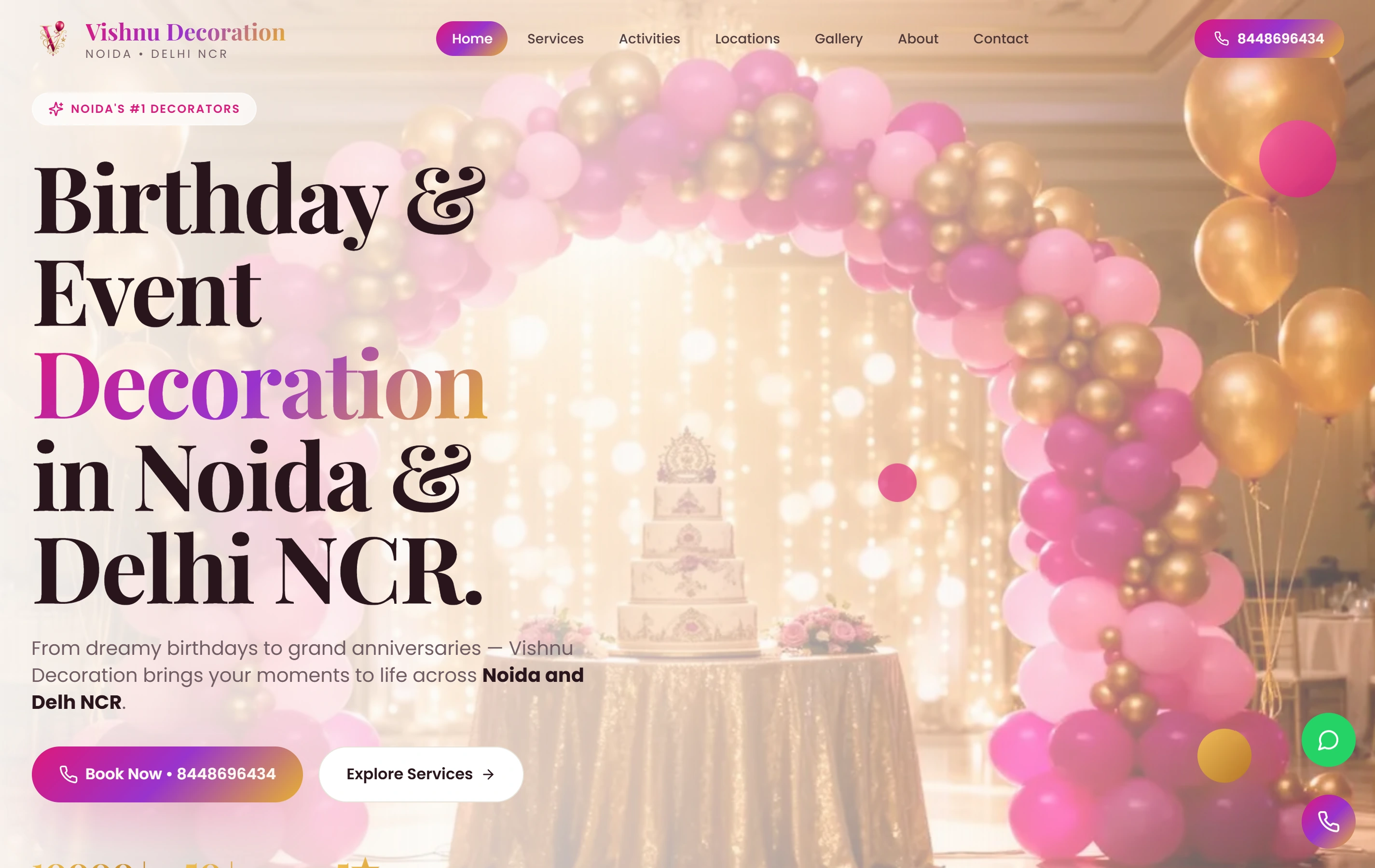
Vishnu Decoration is documented in our portfolio as an events website with themed galleries and a contact route. Its screenshot is a public presentation reference. It does not demonstrate the hypothetical first-action behaviour, a Madurai engagement or a measured performance result; interaction acceptance needs its own review.

ExperienceMobile-first
ContactWhatsApp
FocusService gallery
Vishnu Decoration websiteVishnu Decoration
Practical questions

Questions before commissioning the website.

Clarify the content, delivery and ownership before work starts.

Does the website need to be fully specified before we speak?

No. Share the current material and the visitor tasks that matter. Discovery can identify the page types, content gaps and functions worth including. The proposal then makes the actual commission and your preparation responsibilities explicit.

Can our team add services and projects?

The CMS can be scoped for the recurring content and navigation tasks you need. We review an ordinary update and preview with the intended editor. A new interaction or content type may need additional work rather than unplanned copying.

Will you test every possible browser and device?

The proposal defines the review coverage and important journeys. We record observations within that scope and address agreed issues. It would be misleading to turn a limited review into a universal compatibility or performance guarantee.

Is SEO part of the website project?

The agreed build can include useful content, metadata, crawlable links and sitemap checks. Ongoing search visibility is a separate outcome to observe. Our Ranchi team does not promise rankings or describe a Madurai office or local delivery history.