
Skip to content
Digital Services for Mohali Businesses

A clearer public presence. A considered working system.

Softglimmer works with Mohali businesses on websites, ecommerce, software, mobile apps and connected workflows. We can rebuild a public site, design a new product or improve a specific operating task. Our studio is in Ranchi, with planning and delivery arranged remotely around your material, decision-makers and agreed project scope.

Compare the service choices
Plan the public experience and the tools it needs to work with.
  1. 01

    Understand the present setup

    Identify useful content, existing tools and the people relying on them.

  2. 02

    Choose a complete scope

    Connect design and development with the intended customer and staff tasks.

  3. 03

    Prepare the next owner

    Include editing, migration, review and operating guidance.

An example journey, shaped around your requirements.

A complete digital project

Improve the site without leaving the wider project undefined.

We can plan, design and implement a service website, an online catalogue or store, a staff application, a customer portal or a mobile product. A project can include the content structure, interface design, working functions and the preparation needed for a managed release. Discovery helps decide which combination answers the business need.

When a public site is being rebuilt, existing working tools are part of that discussion. Staff may rely on an enquiry export, a customer record or a supported external service. We identify those relationships and agree what is retained, changed or developed separately. The finished scope should explain the customer-facing improvement and the operating work needed to use it.
Set the scope before the build

Make the buying decisions visible.

01

What improves publicly and what changes internally?

Write down the visitor problem and the staff task separately, then identify their connection. A clearer website may solve the public problem while the existing operating tool remains appropriate. New functions need a defined reason and their own acceptance.

02

What must survive a rebuild?

Inventory useful content, addresses, enquiry routes and the connections people rely on. Include the owners of relevant accounts and tools. Decide what moves to the new site and how the team will check that the retained work still has a useful route.

03

Who can approve the connected work?

A public-page reviewer and a staff-tool owner may have different responsibilities. Nominate the people who can approve content, data exchange and operating changes, with written decisions available between remote reviews.

What you receive

Agree concrete outputs, from brief to handover.

The proposal records which outputs are included and who reviews them.

01

Current-state and scope brief

A record of the goals, users, useful existing material and operating dependencies. Define the chosen first release and the client decisions needed to prepare a meaningful estimate.

02

Content and migration map

A page inventory and proposed structure, including retained information and useful existing URLs. Identify content gaps, media permissions and the material the business will supply or approve.

03

Design and task specification

Representative page or application layouts with the relevant states and actions. Use realistic content so reviewers can assess the reading journey and the task before implementation expands.

04

Working site or application

The agreed templates, editing controls and functions, with any specified data exchange. Keep the responsibilities of the website and connected tools visible in the implementation scope.

05

Acceptance and release record

Checks for the selected customer and staff journeys, important links and receiving results. Record unresolved items, release approval and the planned response if the new arrangement is not ready.

06

Owner-focused handover

Editing guidance, access ownership and a practical operating explanation. Agree the maintenance boundary, issue-reporting route and materials required by the person taking responsibility after launch.

An optional hypothetical example

A redesigned form still needs to fit the staff tool’s import.

Imagine a hypothetical service business rebuilding its website while retaining a staff tool that receives an agreed enquiry file. The new form is easier to read, but its export uses different headings and field order. Staff cannot safely assume that the existing import will interpret the new file correctly. This example is a discovery and acceptance task, not a Mohali client or a delivered integration claim.

Review a small permitted sample with the receiving owner. Agree which information the new form collects, how it maps to the supported file and what happens when a value is missing. The project may preserve the existing exchange or include an explicit change to the receiving process.

Follow the sample into the staff record before accepting that part of the rebuild. A successful download alone does not establish that the receiving work has the intended information.

Prepare a useful first conversation

Bring the tools and the people behind the website.

Share the present site, the reason for changing it and a short list of important visitor tasks. Add the ordinary staff process that receives an enquiry or customer request. Redacted examples and a tool owner’s explanation are more useful than assumptions based on the public interface alone.

Identify who supplies content, who approves the release and who operates the result. Where replacement or migration is involved, include the account owners and any constraints on access. These inputs help us choose a sensible sequence for the agreed website, design and development work.

Remote delivery from our Ranchi studio

Plan the work and the reviews together.

  1. 01

    Review and define

    Our Ranchi studio reviews the existing material and goals remotely. We distinguish the public improvement, the operating need and the dependencies that require inspection before the project is scoped.

  2. 02

    Design and agree

    Review the proposed information structure and representative tasks with the right owners. Record decisions about retained content, editing and connections before approving the design direction and implementation plan.

  3. 03

    Build and inspect

    Implement the selected work and demonstrate the agreed outcomes. Where data is exchanged, inspect the receiving result; where a site is replaced, review the important retained journeys and links.

  4. 04

    Release and equip the team

    Agree readiness, handover material and the route for later changes. Arrange dated sessions in Asia/Kolkata and keep the decisions accessible to the people editing and operating the delivered work.

From the published website portfolio

Explore a real website project.

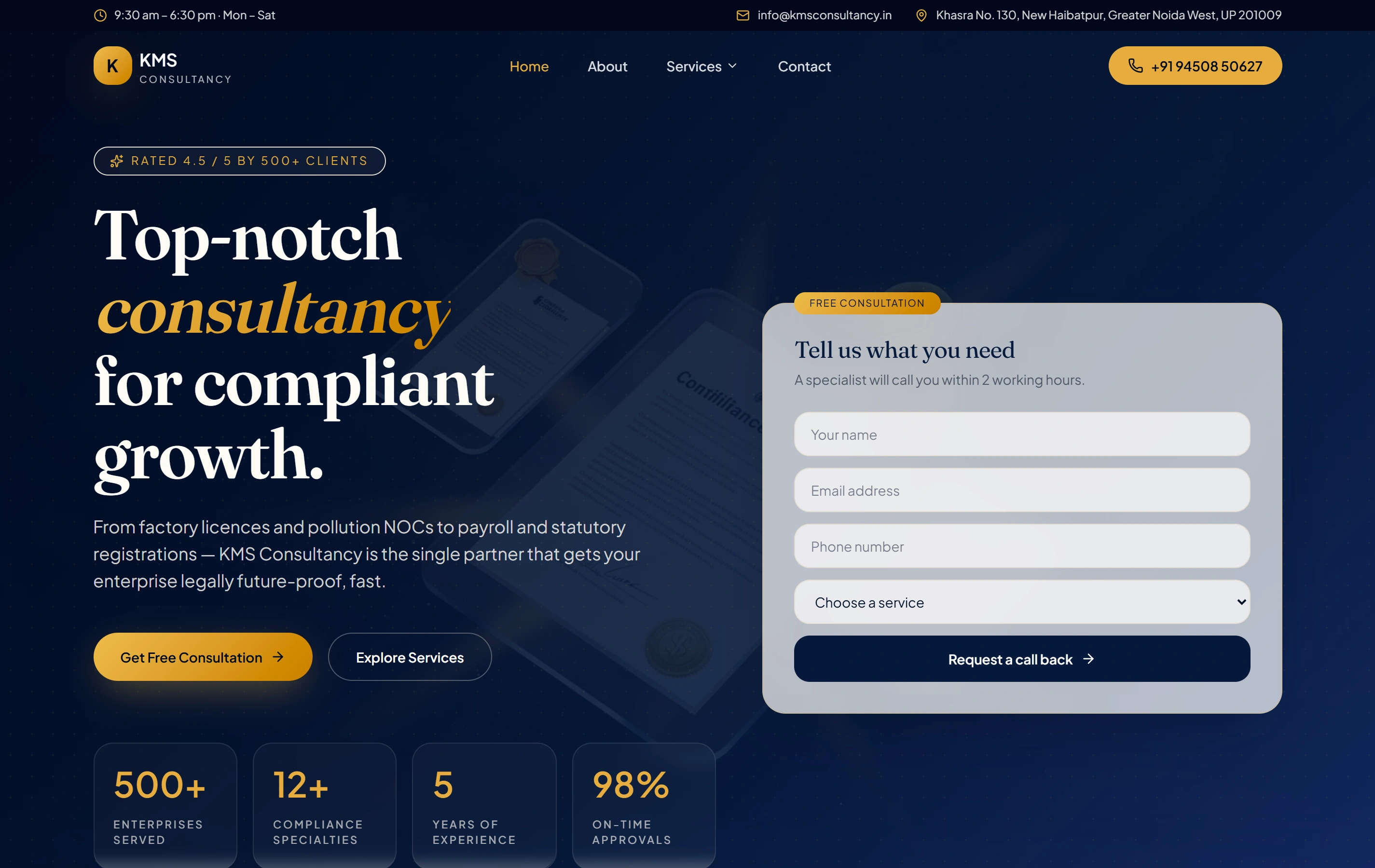
KMS Consultancy’s published website turns a complex service catalogue into clear pages and an enquiry journey. The project provides a real example of service information and a consultation contact route within our website portfolio.

ContentCompliance
StructureService pages
ActionEnquire
KMS Consultancy websiteKMS Consultancy
Practical questions

Questions before starting the project.

Must the website and every staff tool change in the same project?

No. We identify the useful first outcome and the dependencies it actually needs. A website rebuild can retain working tools, while a new application or deeper connection is separately scoped. The proposal should make those boundaries and the responsibilities at each handover clear.

What does migration include when replacing a website?

It depends on the agreed inventory. Useful pages, media, addresses, forms and supported connections need review rather than an assumption that everything transfers automatically. We describe the content mapping, implementation and acceptance work included, with the client approving retained facts and access arrangements.

How will our team review and take over the work?

We deliver remotely from Ranchi with nominated reviewers and a written decision trail. The future editor and operating owner take part in relevant demonstrations and handover tasks. The scope sets out the outputs, inputs, review stages and ongoing care arrangements before the work proceeds.