
Skip to content
WordPress & CMS Development

WordPress development for Mumbai teams.

Softglimmer develops WordPress and CMS websites for Mumbai businesses that publish and maintain public information. We can plan the content structure, design responsive templates, implement editing controls and connect the approved services your site needs. The work can start with a new website, an existing installation or a content migration. Delivery is remote from our Ranchi studio, with a defined review process and practical launch and maintenance handover.

Explore the scope
A public website and an editor experience reviewed together.
  1. 01

    Structure the content

    Give recurring information useful fields and relationships.

  2. 02

    Build the website

    Connect responsive templates to a manageable editor experience.

  3. 03

    Hand over ownership

    Agree publishing, technical upkeep and recovery responsibilities.

An example journey, shaped around your requirements.

The service you can commission

Commission the public site and the way it is maintained.

A CMS build includes more than selecting a theme. We review the audience, page hierarchy, recurring information and tasks your editors perform. Service pages, projects, people and articles may need different fields while sharing a coherent visual system. The right structure lets the website grow without asking each editor to recreate its layout.

The agreed work can include content modelling, theme or template development, responsive presentation, section controls, media handling and approved forms or integrations. For an existing site, we inspect the current content, dependencies and working behaviour before proposing replacement. A migration also needs a visible plan for records, media, useful URLs and checks after transfer.

WordPress is evaluated against the publishing requirement and maintenance expectations. Complex private transactions or operational permissions may need a separate application. The content-library example below is optional: a business can commission a straightforward service website or CMS improvement without that particular browsing problem.
Choose the starting point

Choose the engagement around the site you need.

The editor workflow and public journey belong in each option.

01

Build a new CMS website

Agree the audience, page plan and recurring content. Develop the selected templates with real material, identify who prepares it and review the publishing task alongside the public site before launch.

02

Improve an existing WordPress site

Inspect its theme, extensions, hosting context and known editing problems. Preserve useful content and connected functions while targeting the agreed changes. A full rebuild should have a reason beyond a dated appearance.

03

Migrate into a maintainable structure

Inventory the source records, assets and addresses, then agree their destination and ownership. Review a representative transfer before moving the remaining library, with corrections and launch responsibilities included in the scope.

What the proposal can include

Six output groups to make the build reviewable.

The final proposal names the content, templates, functions and operating responsibilities included.

01

Content and page architecture

An agreed structure identifies page types, recurring records, useful relationships and ownership. Representative material shows which fields are required and where a page needs genuinely different information.

02

Responsive theme and templates

Build or adapt the selected public layouts around the brand and content. Review headings, navigation, images and calls to action across the agreed screen sizes with realistic short and longer examples.

03

Editing controls and guidance

Provide the scoped fields, sections and media choices, with useful limits where design should stay consistent. Rehearse a normal publishing task using the editor’s intended access rather than only an unrestricted administrator account.

04

Required connections and dependency record

Implement approved forms and supported services, recording account owners and the purpose of each dependency. Premium licences, missing interface capability and recurring costs need explicit decisions rather than hidden assumptions.

05

Migration and release checks

Where migration is included, check records, media and agreed URL transitions. Review important public journeys and enquiry behaviour, then confirm the remaining content and approval dependencies before the switch.

06

Maintenance and recovery handover

Explain access ownership, updates, backups and escalation. Distinguish an editor correcting content from technical recovery involving the site environment, and identify which ongoing work is covered by the agreed support arrangement.

An optional working example

A content library changes topics while readers still need a route through it.

Consider a hypothetical Mumbai business publishing practical guides. An editor reorganises broad topics into clearer subjects, but visitors still enter from the old overview page. They need an understandable way to browse the current library, not a set of internal labels that only the editor recognises. This is an illustrative commissioning case, not a local client story or a promise about a particular search extension.

Design the reader’s choices with sample content

Choose several ordinary guides and one that fits more than one subject. Agree the visible labels, relationships and overview destinations with the content owner. Then review how a reader reaches a relevant guide without already knowing its exact title.

Preview the change beyond one article

Have an editor change a topic on a draft and inspect the affected overview and navigation. Identify what should remain available at an existing address and what requires an approved transition. The publishing checklist should cover those public relationships as well as the edited text.

Decisions before production

Keep publishing flexibility connected to ownership.

These decisions matter before selecting additional tools.

01

Fields or free-form layouts?

Separate recurring facts from genuine editorial variation. Agree which sections editors can rearrange and which shared design rules should remain protected. A representative long page is more useful than a demonstration containing only short placeholder text.

02

Which dependency earns its place?

Choose each extension for an agreed requirement and identify its owner, renewal and maintenance needs. Additional search, multilingual content or member functions need review; installing a plugin does not settle the surrounding workflow.

03

Who approves and maintains?

Name the content approver, publisher and technical owner. Decide how changes are reviewed and how someone gets help when a publishing task fails. Content editing and responsibility for updates or recovery are different jobs.

From brief to usable handover

Review the CMS using the tasks your team will repeat.

Mumbai and Ranchi share IST. We arrange remote checkpoints, record decisions and agree a launch window that includes the responsible content and technical owners.

  1. 01

    Discover the current site

    Bring the page list, approved material and ordinary editing tasks. We inspect the existing installation where relevant and identify preservation, migration, access and integration requirements before estimating the defined work.

  2. 02

    Design with real content

    Review representative templates and the proposed editing model together. Resolve unusual content lengths, missing images and shared information before extending the model across the website.

  3. 03

    Build and rehearse

    Implement the agreed scope, then ask the intended editor to complete a draft, preview and publication exercise. Check public journeys and required connections with clear expected results and recorded issues.

  4. 04

    Launch and transfer ownership

    Approve the release, complete any agreed migration and walk through routine editing. Document account access, dependencies, maintenance and the recovery route so the next change has an identifiable owner.

Documented website work

A real service-led website to review.

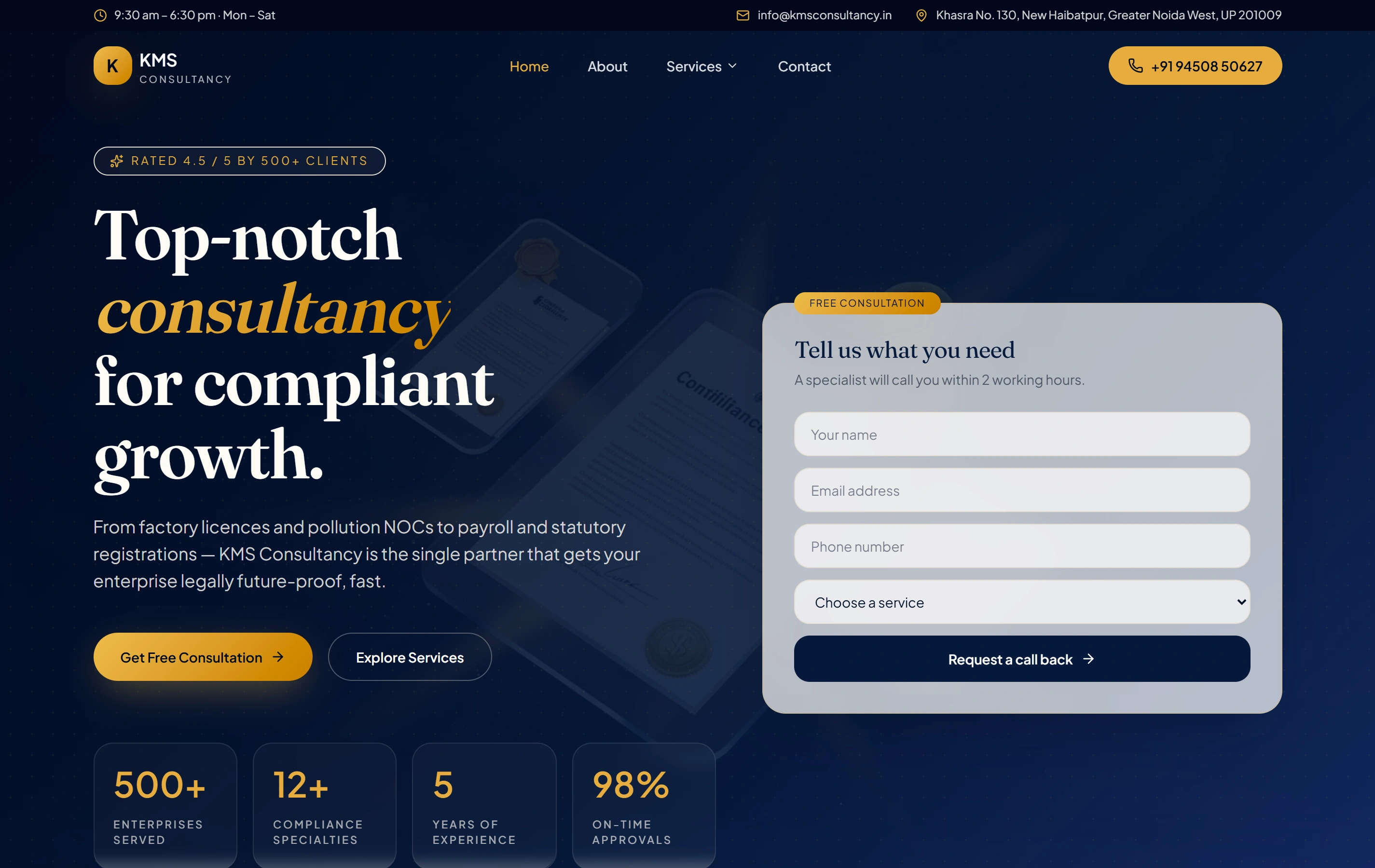
KMS Consultancy is documented in our portfolio as a structured compliance-consultancy website with service information and an enquiry journey. The screenshot shows that public presentation. It is not evidence of a Mumbai client, a verified WordPress installation or unseen publishing controls. Those parts of a new CMS commission need their own review.

ContentCompliance
StructureService pages
ActionEnquire
KMS Consultancy websiteKMS Consultancy
Practical questions

Questions before you commission the work.

The scope and approval route should be clear before the project starts.

Can you work with our existing theme and plugins?

Yes, after reviewing their role, condition and dependencies. The scope identifies what can remain and what needs alteration. We do not remove working functionality or assume every extension must be replaced without examining the requirement.

Will editors be able to change every part of the design?

We agree the useful controls rather than promise unrestricted layout editing. Recurring content can use structured fields while selected sections allow variation. The intended editor rehearses ordinary changes before the handover is accepted.

Can you migrate our content and preserve useful links?

Migration can be scoped after an inventory of content, assets, addresses and connected behaviour. We agree the mapping and checks before the switch. Large or inconsistent libraries may need preparation and a reviewed sample transfer first.

Does your website portfolio identify the CMS used?

The portfolio describes documented website features. KMS Consultancy shows structured service information and an enquiry route; its entry does not verify WordPress or particular editor controls. The platform and functionality of your commission are established through its own scope and acceptance.

What happens after launch?

The proposal identifies publishing, update, backup and support responsibilities. Ongoing maintenance and later functionality are agreed separately where required. Our team works remotely from Ranchi; this page does not claim a Mumbai office or local client results.